
The Productivity Meter: An Interesting Way to Think About Accountability
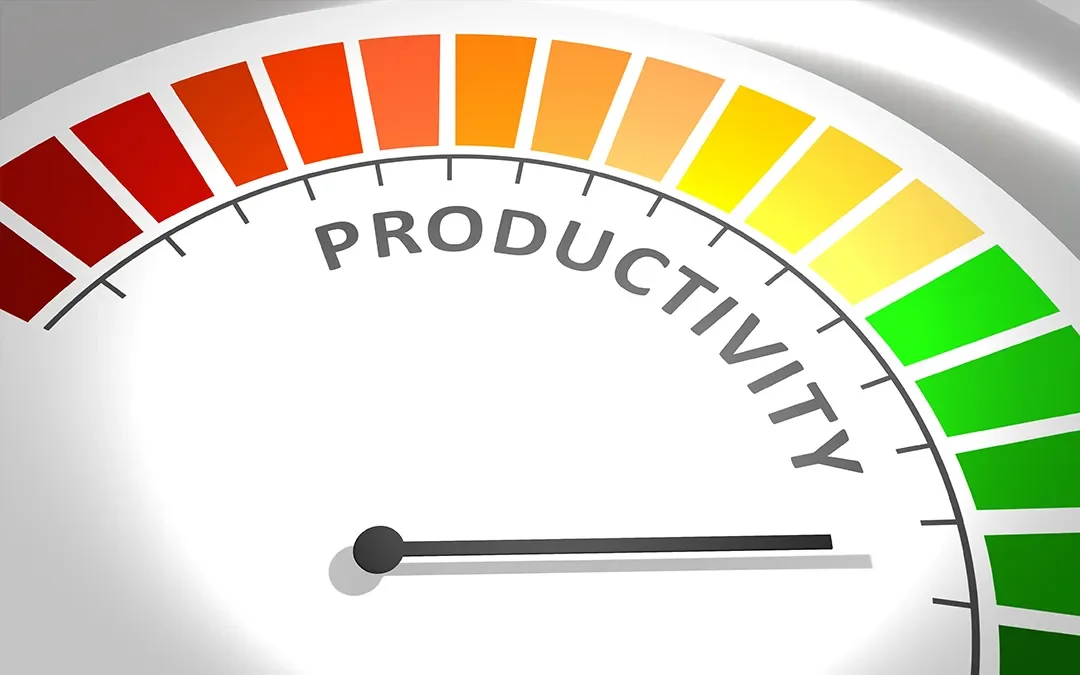
Imagine a world where we all have a meter floating above our heads, reflecting your productivity level at work in real time.
Your meter might dip if you linger too long in a water-cooler conversation, or if you’re fumbling through something outside your skill set or comfort zone. On the other hand, when you become laser-focused on a deadline or power through a high-priority task, your level rises.
Don’t get too bogged down in the mechanics of how productivity would be measured—this is just a fun little “what-if.”
What Would Change If Productivity Was Visible to Everyone?
Now imagine how people’s work behaviors might change if these meters were visible for all to see.
Would productivity rise?
Would backlogs start to shrink?
Would projects get completed on time?
And would we eventually come to tolerate a “standard” level of productivity as acceptable—something like: As long as your meter reads 70% or above, you’re doing enough to get by.
Would We Make Better Hiring Decisions With a Productivity Score?
What about hiring decisions? Similar to restaurants that include a calorie count on menu items, would we make better decisions if we knew a person’s productivity level ahead of time?
Granted, people still order the cheese fries even when they know the calorie count… so perhaps we’d still find ways to justify hiring someone with less-than-ideal productivity.
How Would You Feel If You Could See Your Number?
Now consider what your meter might display. How does that number make you feel?
Maybe you feel proud—you’re kicking butt and taking names, and everyone can see it.
Or maybe you feel embarrassed—your number is lower than your peers, and everyone can see it.
If your number is average, you might feel a certain degree of relief: At least I’m not as bad as some people.
Or perhaps you feel confused. You thought you were working hard… so why isn’t your number higher?
Now take it one step further: What if you were the only one who could see your meter? Would it change your behavior—especially in the long run?
Accountability Can Be Healthy or Unhealthy
It has been said that character (or in some versions, integrity) is demonstrated by what you do when no one is looking. A productivity meter wouldn’t develop character—because everyone would be looking. In fact, the consequences would likely outweigh the benefits over time.
A productivity meter would be the ultimate form of accountability… and accountability comes in two varieties: healthy and unhealthy.
Healthy accountability pushes us toward progress.
Unhealthy accountability—guilt, intimidation, fear, and all their relatives—serves to label and demoralize.
Both can be self-inflicted or others-inflicted, but only one type of accountability truly unlocks human potential.
A Better Question: What Is Your “Right Level” of Productivity?
Challenge yourself to reflect on what your meter might display.
Monitor it for signs of:
Burnout (too high for too long)
Boredom (too low for too long)
Then adjust accordingly.
If you lead others, try this same exercise for your team. Keep in mind: no one operates at full steam 100% of the time. If someone registers low, ask yourself why. Don’t assume they’re lazy. In many cases, they’re either bored—or they’re simply not using their skills and strengths to their fullest capacity.
And don’t confront them with your assessment of their number (remember, this is just a “what-if” exercise). Instead, ask questions, learn what you can, and adjust accordingly.
I’m grateful we don’t live in a world of productivity meters… but it certainly makes for an interesting—and dare I say, productive—time of reflection.